The oil warning light is one of the few dashboard lights that can destroy your engine within minutes if you ignore it. Here’s what causes it and how to diagnose it yourself in under 5 minutes.
Is It the Oil Pressure Light or the Check Engine Light?
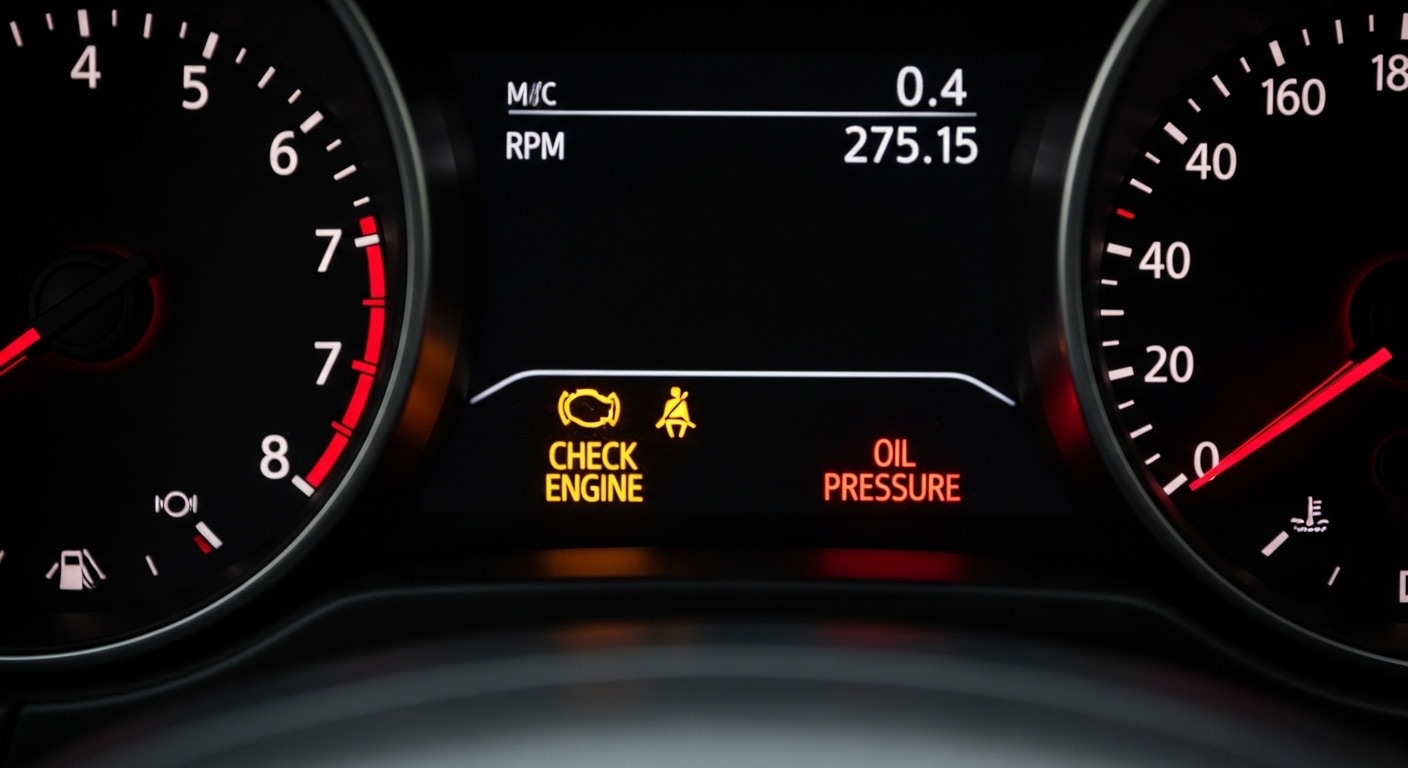
There are two different lights to know:
| Light | Looks Like | Means |
|---|---|---|
| Oil pressure light | Oil can icon, usually red | Oil pressure is critically low — stop immediately |
| Check engine light | Engine outline, usually yellow | Electronic fault detected — could be oil-related |
A check engine light oil change situation happens when dirty, degraded, or wrong oil triggers fault codes in the engine management system — most commonly on Variable Valve Timing (VVT) systems that are extremely sensitive to oil quality and pressure.
5 Reasons Your Engine Oil Light Is On
1. Low Oil Level
The most common cause. Oil naturally burns off and leaks over time.
How to check: Pull the dipstick, wipe it, re-insert, pull again. Level should be between MIN and MAX.
Fix: Top up with the correct oil for your engine. If it’s consistently low, check for a leak or burning smell.
2. Low Oil Pressure
Even with enough oil in the sump, pressure can drop if the oil is degraded or too thin for the engine.
Symptoms: Oil pressure warning light, engine ticking at startup, sluggish performance.
Fix: If the level is fine but the light stays on — stop driving and call a mechanic. Low pressure with a full sump indicates a mechanical problem.
3. Faulty Oil Pump
The oil pump circulates oil to every moving part. If it fails, pressure drops immediately and the engine starts running dry within seconds.
Signs: Sudden oil pressure drop, overheating, knocking sounds.
Fix: This is not a DIY repair. Tow the car — driving even a short distance risks complete engine seizure.
4. Faulty Oil Pressure Sensor
The sensor itself can fail and send a false reading — making the light come on even when oil level and pressure are perfectly normal.
How to check: If the light comes on immediately at startup and the dipstick shows a full, clean level, a faulty sensor is likely.
Fix: The sensor is cheap to replace ($15–$50 part). Have it confirmed with an OBD scanner first to rule out real pressure issues.
5. Clogged Oil Filter
A blocked filter restricts oil flow, which reduces pressure even if there’s plenty of oil in the pan.
This happens when:
- The filter has never been changed
- You’ve significantly exceeded your oil change interval
- You used the wrong filter for your engine
Fix: Change the oil and filter. Most manufacturers recommend replacing the filter at every oil change — not every other one.
What to Do When the Light Comes On
- Pull over safely — do not drive more than 30–60 seconds with the oil pressure light on
- Turn off the engine
- Check oil level with the dipstick (engine off, car on level ground)
- If oil is low: Top up and check if light goes off
- If oil level is fine: Do not restart — call for a tow
Driving with low oil pressure for even 2–3 minutes can score bearings and journals that cost $3,000–$6,000 to repair.
Prevent It: Use the Right Oil at the Right Interval
The most reliable way to avoid oil-related warning lights is simple: use the correct oil spec and change it on time.
- Wrong viscosity can trigger pressure-related codes
- Degraded oil loses pressure-holding ability faster
- Old oil clogs VVT solenoids, triggering check engine codes (P0010, P0011, P0014)
Use OilFinderPro to find the exact viscosity, standard, and OEM approval for your engine by VIN — and stop guessing.
Read next:
- Engine Oil Pressure Light On? Here’s What to Do Right Now
- Best Engine Oil: 4 Checks That Actually Matter
| *Published: February 2026 | 4-minute read* |