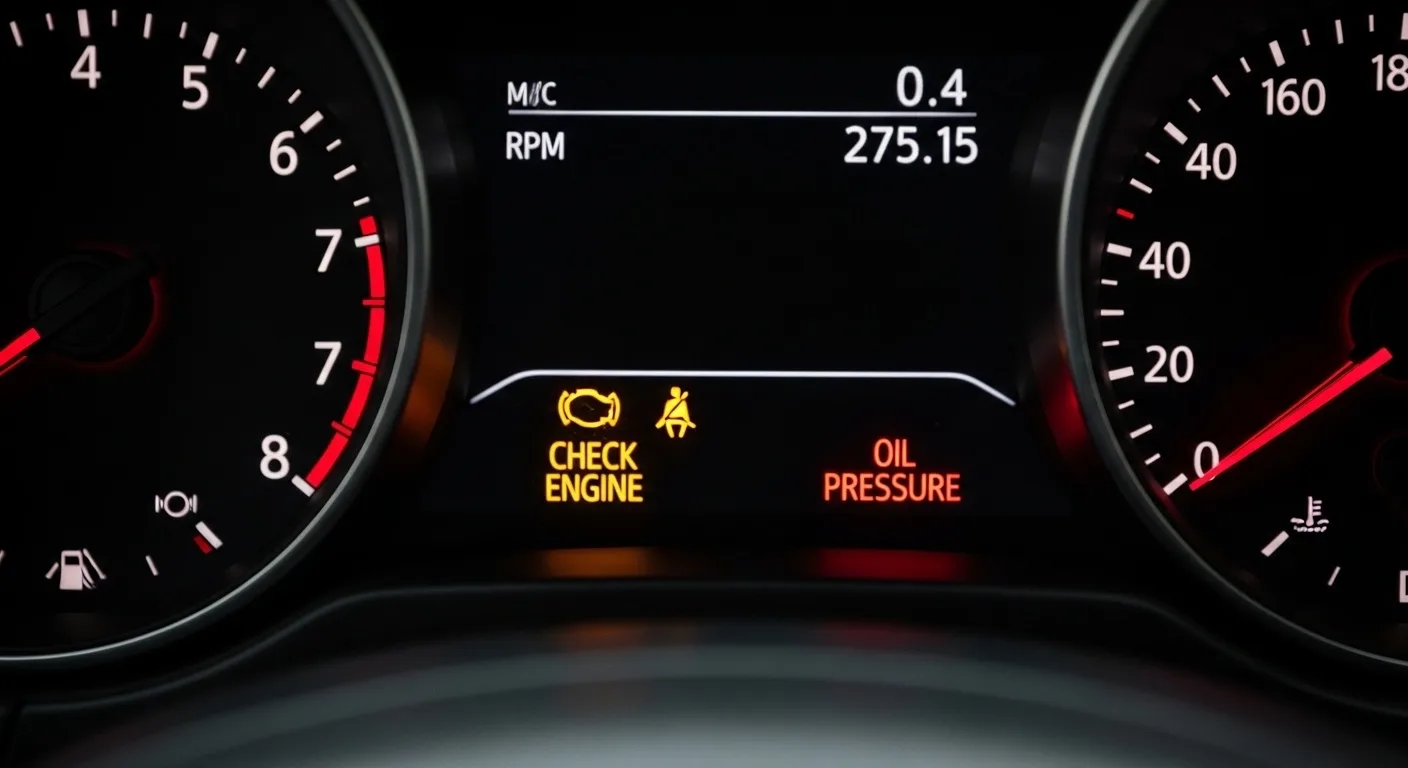
A check engine light after an oil change does not automatically mean the oil needs changing again. First identify the lamp. A red oil-can or “low oil pressure—stop engine” warning requires shutdown; the amber check engine light means the engine computer stored an emissions or powertrain fault code.
Direct answer: If it is an oil-pressure warning, stop safely and switch off. If it is the check engine light and the engine runs normally, read the diagnostic code before replacing parts. Inspect anything disturbed during service, then verify the oil level and complete oil specification.
Check Engine Light vs. Oil-Pressure Light
| Warning | What it generally means | First action |
|---|---|---|
| Red oil can or low-pressure message | Possible loss of engine oil pressure | Stop safely and switch off |
| Amber check engine light, steady | Stored emissions or powertrain fault | Read the diagnostic code promptly |
| Amber check engine light, flashing | Active fault such as a misfire may be damaging the catalyst | Reduce load, stop safely, and follow the manual |
| Oil-life or maintenance reminder | Scheduled service calculation | Confirm that the service was reset correctly |
The check engine light belongs to the emissions diagnostic system. GM describes it as “part of the vehicle’s emission control on-board diagnostic system”; if it’s on while the engine runs, “a malfunction has been detected and the vehicle may require service.” If it flashes, GM says a malfunction has been detected “that could damage the emission control system”: reduce speed and load, and if it keeps flashing, park safely, turn the vehicle off and wait at least 10 seconds before restarting (2023 Silverado 1500 owner’s manual, pp. 117–118). Toyota says the same lamp indicates a malfunction in the engine control, throttle control or emission control system and asks owners to have the vehicle inspected immediately (2024 RAV4 owner’s manual).
The red oil pressure warning is different and more urgent. Use the oil pressure light guide for that one.
Can dirty oil cause a check engine light?
Not directly. In GM’s manual, oil-change reminders come from the separate oil life system (“CHANGE ENGINE OIL SOON”), while the check engine light reports emission and powertrain faults (2023 Silverado manual, pp. 117 and 341). Overdue oil isn’t one of the things the check engine light reports. An oil change can coincide with a check engine light for the reasons below, and the stored code is what tells you which one.
Why a Check Engine Light Can Appear After Service
A connector or intake hose was disturbed
Accessing the oil filter or filler area can require moving an intake duct, engine cover, or wiring. A loose duct after the airflow sensor or an unplugged sensor can create a fault. Compare the code with the exact area that was touched.
Oil was spilled into a connector or ignition well
A small spill on the engine may only smell while it burns off. Oil inside an electrical connector or spark-plug well can contribute to a misfire or circuit fault and should be cleaned using the manufacturer-approved procedure.
The oil level is incorrect
Too little oil can affect systems that use engine oil hydraulically. Too much can aerate oil or send it through crankcase ventilation. Check on level ground using the owner’s-manual wait time; do not add a quart based only on a dashboard lamp.
The oil does not meet the complete requirement
Viscosity is only one field. The engine may also require an API/ACEA category and a formal OEM approval. An incorrect oil can affect variable valve timing or other oil-operated controls, but the stored code and service data must support that diagnosis.
The light is unrelated to the oil change
A fuel, ignition, catalyst, evaporative-emissions, or sensor fault can appear at the same time by coincidence. Timing alone is not proof that the oil service caused it.
What to Do Next
- Photograph the warning and note whether it is steady or flashing.
- Stop immediately if it is the oil-pressure warning or the engine is noisy.
- Read the OBD diagnostic code; do not clear it before recording freeze-frame data.
- Check the oil level with the correct hot/cold procedure.
- Inspect the filler cap, filter, drain plug, air ducts, and connectors touched during service.
- Confirm the invoice lists the required quantity, viscosity, category, and OEM approval.
- Return to the service provider when the fault began immediately after its work, or arrange diagnosis if the warning is urgent.
Avoid replacing an oxygen sensor, pressure sensor, or timing component from the code description alone. A diagnostic code identifies a monitored fault, not necessarily the failed part.
Browse OilFinderPro’s available vehicle-specific oil information to compare the recorded service oil with the applicable requirements.
Frequently Asked Questions
Can dirty oil cause a check engine light?
Not directly. Oil-change reminders come from the oil life system; the check engine light reports emission and powertrain faults detected by the on-board diagnostic system. Read the code to find the actual cause.
Can an oil change cause the check engine light to come on?
It can if a connector, intake duct, or other service-area component was disturbed, or if the oil level is incorrect. The timing alone does not prove the oil change caused the warning, so record the diagnostic code before replacing parts.
Should I add oil when the check engine light comes on?
Only add oil when the owner’s-manual procedure confirms that the level is low. A check engine light is not an oil-level gauge, and adding oil to a full engine can cause an overfill.
What if the warning is the red oil-pressure light?
Stop safely and switch the engine off. Follow the owner’s manual before restarting; a pressure warning is more urgent than a routine check engine light and may remain serious even when the dipstick level is normal.
Sources
- Chevrolet, 2023 Silverado 1500 Owner’s Manual, pp. 117–118 (Malfunction Indicator Lamp: steady vs. flashing, restart after 10 seconds) and p. 341 (Engine Oil Life System). Accessed October 1, 2026.
- Toyota, 2024 RAV4 Owner’s Manual (OM42F42U), If a warning light turns on: malfunction indicator lamp and low engine oil pressure warning light. Accessed October 1, 2026.