
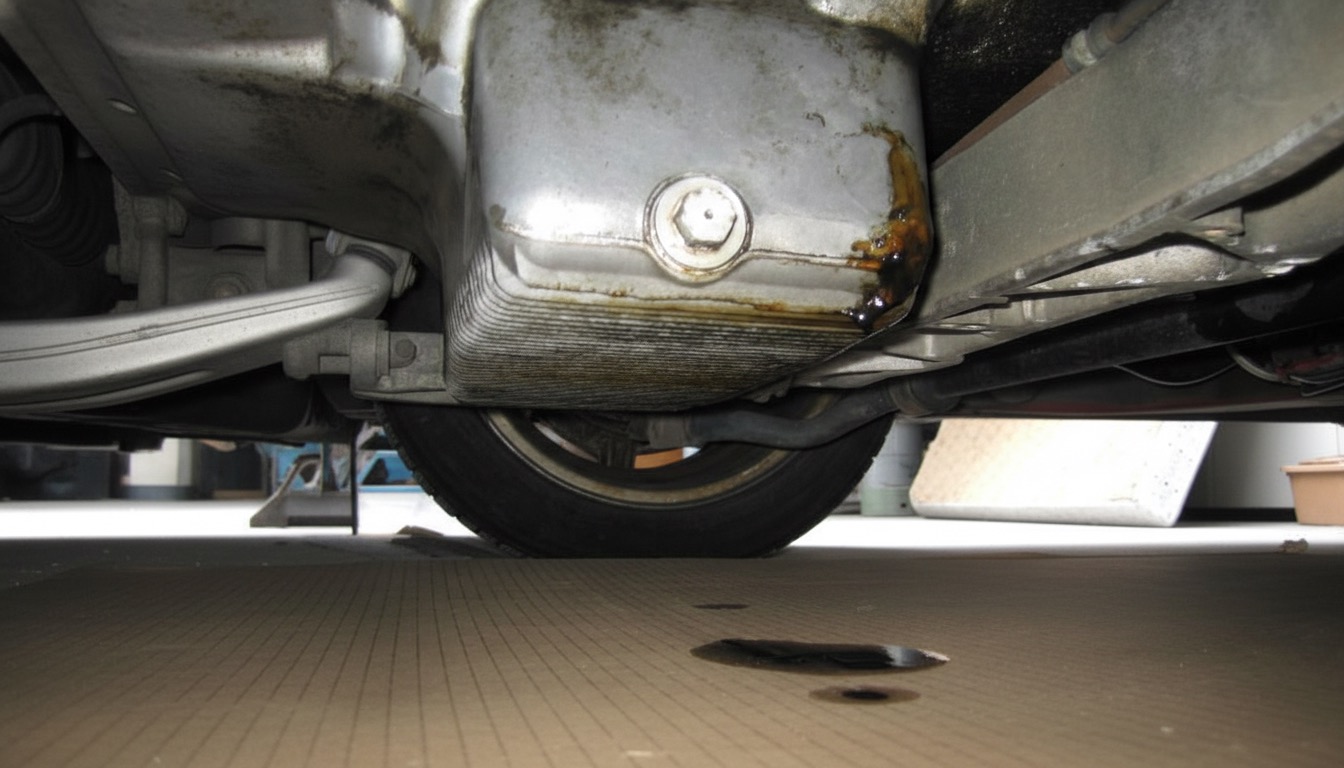
Finding an oil stain under your car is never a good sign. Engine oil leaks are one of the most frequent issues mechanics see — especially in vehicles older than six to eight years — and ignoring them can lead to serious, expensive engine damage.
Watch: 2-Minute 14-Second Common Engine Oil Leaks Video
Want the fast version first? This video breaks down the 6 most frequent culprits behind engine oil leaks, how to identify them, and what it likely costs you in repairs before it's too late.
Here’s a breakdown of the most common culprits and what you need to know.
1. Valve Cover Gasket
This is probably the most common oil leak drivers encounter. The valve cover gasket sits at the top of the engine, sealing the valve cover to the cylinder head.
Over time, the rubber material hardens, cracks, and fails. You might notice a burning oil smell or light smoke rising from the engine bay — but not always a puddle on the ground, since oil often burns off on hot components before it drips.
Cost: Parts cost as little as $10–$30, though labor can push the total repair to $1,000 on complex engines like certain BMWs.
2. Oil Pan Gasket
The oil pan sits at the bottom of the engine and holds your oil supply. Its gasket is constantly exposed to heat cycles and road debris, making it a common failure point.
A leaking oil pan gasket usually produces visible drips on the ground.
Cost: Parts are typically $50–$150, but labor can be significant — some vehicles require subframe removal, turning this into a $1,000+ repair.
3. Crankshaft and Camshaft Seals (Main Seals)
The front and rear main seals keep oil from leaking around the crankshaft — the rotating heart of your engine. These seals wear down and become brittle with age and mileage.
Cost: They’re inexpensive parts ($50–$100) but notoriously labor-intensive to replace, often running $600 or more at a shop.
If you’re mechanically inclined, this is one of the best candidates for a DIY repair.
4. Oil Filter and Drain Plug
One of the simplest and most overlooked causes of oil leaks — especially right after an oil change.
If the drain plug or oil filter isn’t tightened to the correct torque, or if the old filter gasket wasn’t removed before installing the new one, oil will seep out immediately. Always check these first if you notice a leak shortly after a service.
Cost: The fix is usually free if you catch it early.
5. Oil Filter Housing Gasket
Many modern engines have an oil filter housing with its own rubber gasket that degrades over time. Leaks from this area are easy to misidentify as coming from the filter itself.
Cost: The parts are cheap ($10–$20), and with 1–3 hours of labor the total repair typically runs $100–$300 — making it one of the more manageable leaks to address.
6. Cylinder Head Gasket
This is the leak you really don’t want. The head gasket seals the engine block to the cylinder head, keeping oil, coolant, and combustion gases in their proper channels.
When it fails, you can lose oil rapidly, see coolant mixing with oil (a milky residue on the dipstick), or notice white exhaust smoke.
Cost: This is a serious repair — both in complexity and cost — and shouldn’t be delayed.
The Bottom Line
The vast majority of oil leaks trace back to one simple root cause: rubber and rubber-like seals and gaskets that degrade with age. Heat, pressure, and time cause these materials to crack and shrink, breaking their seals.
If your vehicle is approaching the six-to-eight-year mark, proactive inspection of these components can save you from a much larger repair bill down the road.
If you spot an oil leak, don’t ignore it. Even a slow drip can become a serious low-oil condition faster than you’d expect — and running an engine low on oil is one of the quickest ways to destroy it.
Read next:
| *Published: February 2026 | 3-minute read* |