Too much oil in the engine means a confirmed level above the maximum mark, and manufacturers treat any amount above it as a problem to fix. Ford’s manual is blunt: “Do not add oil further than the maximum mark. Oil levels above the maximum mark may cause engine damage” (2022 F-150 owner’s manual, p. 488). Toyota tells owners to keep the level between the low mark and the “refill upper limit mark” (2024 RAV4 owner’s manual). Recheck the level on level ground using the exact procedure in the owner’s manual. If it is still above MAX, do not assume the engine will simply burn off the excess.
Direct answer: A barely high reading after an incorrect check is different from a serious overfill. Recheck first. If the level is clearly above the marked range, you know too much was added, or the oil is frothy, smoky, leaking, or accompanied by an oil-pressure warning, switch the engine off and arrange removal before driving.
How Much Overfill Is Too Much?
Anything confirmed above the maximum mark. The manuals cited here set the limit at the mark itself, not at some tolerance beyond it. There is no universal quarter-inch, millimetre, or quart threshold that applies to every engine. Dipstick shapes, sump volumes, drain-back times, and oil-level sensors differ. Ford’s procedure is to check before starting, or to switch the engine off after it warms up and wait 10 minutes for the oil to drain into the pan (2022 F-150 manual, p. 488). Mazda instructs owners to use its warm-engine, five-minute procedure and not exceed MAX.
Use this decision table instead:
| What you see | What it may mean | What to do |
|---|---|---|
| A thin smear just above MAX | Oil on the dipstick tube, a sloped parking spot, or oil that has not drained back | Wipe, reinsert fully, and repeat the manual’s procedure |
| A repeatable reading slightly above MAX | A confirmed overfill, even if the engine has no symptoms | Do not add more; remove enough to return to the approved range or ask a shop to do it |
| A level well beyond the marked range or a known large excess | The sump may be high enough for rotating parts or the crankcase-ventilation system to disturb the oil | Do not start or drive until the excess is removed |
| Froth, smoke, new leaks, abnormal noise, or an oil-pressure warning | Oil may be aerated or entering places it should not | Shut down and arrange professional inspection or towing |
If a vehicle uses an electronic level display or a dry-sump system, the dashboard procedure may require a warm engine, a particular temperature, or an idling check. Do not substitute a generic dipstick method.
Common Too-Much-Oil-in-Car Symptoms
An overfilled engine can show no immediate symptom, so the level reading matters more than waiting for a warning. Possible symptoms include:
- oil that looks bubbly or frothy on a correctly checked dipstick;
- blue-grey exhaust smoke after startup or acceleration;
- a new burning-oil smell;
- oil in the air-filter housing or intake plumbing;
- fresh seepage around seals or gaskets;
- rough running, misfire, or fouled spark plugs;
- an oil-pressure warning or abnormal mechanical noise.
These signs are not proof of overfill by themselves. Smoke can come from worn valve seals or a turbocharger, and a leak can lower rather than raise the sump level. Confirm the oil level before choosing a repair.
Foaming and Crankshaft Contact
The rotating assembly is designed to run above a controlled oil level. If the level rises far enough for moving parts to disturb the sump oil, air can be whipped into it. Cummins’ operating guidance warns that running above FULL can cause foaming or aeration; the exact clearance at which this begins is engine-specific.
Aerated oil is a mixture of oil and air rather than a continuous liquid supply. That can make oil delivery and pressure less stable. This is why a serious overfill can produce a lubrication problem even though the engine contains more oil than required.
Do not diagnose foaming from a few surface bubbles immediately after handling the dipstick. Recheck after the specified drain-back period. Persistent froth plus a confirmed high level is a stop-driving sign.
Smoke and Catalytic-Converter Risk
Excess oil can be pulled through the crankcase-ventilation system or reach the combustion chambers. When engine oil burns, the exhaust may turn blue-grey, spark plugs can foul, and emissions components can be contaminated.
The catalyst risk is not theoretical: a General Motors service campaign for specific 2012–2013 2.4L Equinox and Terrain vehicles links excessive oil consumption from piston-ring wear with catalytic-converter and oxygen-sensor degradation. That campaign is not an overfill rule for other cars, but it demonstrates why sustained oil burning should not be ignored.
Visible smoke, rough running, or an active warning light after an overfill deserves inspection even after the oil level is corrected.
How to Remove Excess Oil Safely
First, confirm the reading and compare it with the refill quantity on the service invoice. Then choose one of these methods:
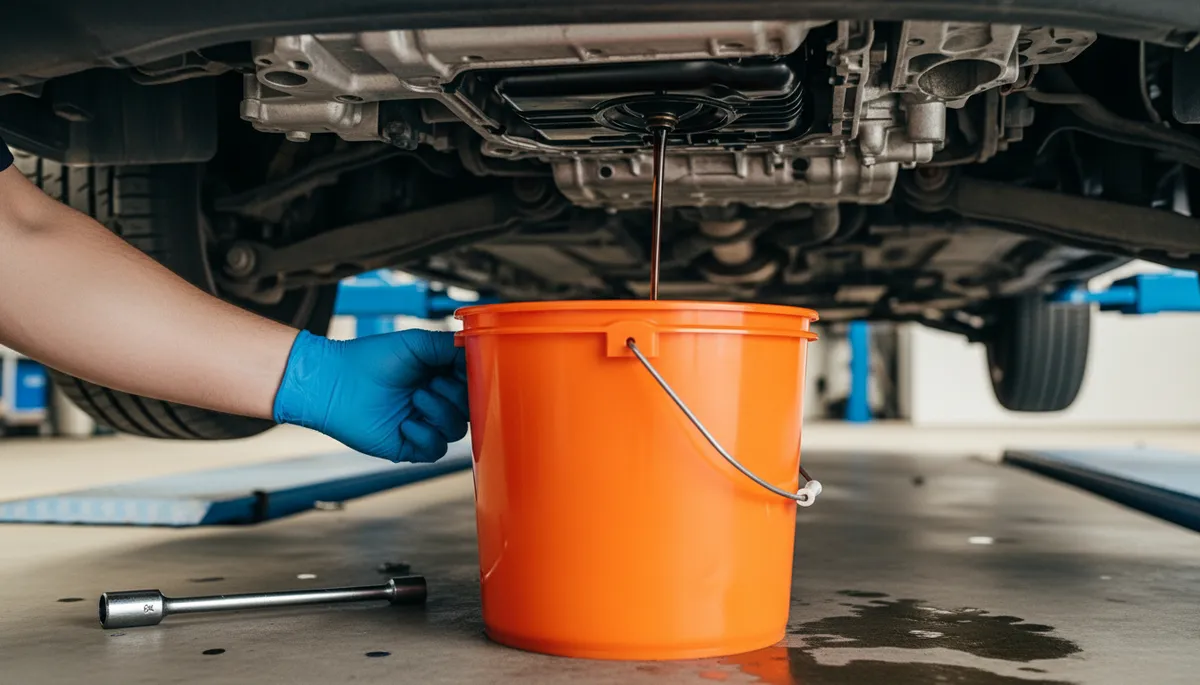
- Use an oil extractor through the dipstick tube. Remove small measured amounts, wait for the oil to settle, and recheck. Stop within the vehicle’s marked safe range.
- Have a repair shop extract it. This is the safest choice when there is no dipstick, the vehicle is low to the ground, the oil is hot, or you do not have safe lifting equipment.
- Drain from the sump only with the correct procedure and equipment. A loose plug can release the whole sump, hot oil can burn skin, and incorrect tightening can create a new leak. Do not crawl under a vehicle supported only by a jack.
Do not remove and reinstall the oil filter merely to shed an uncertain amount. It introduces filter-seal and startup-pressure risks without providing precise level control.
After correction, start the engine only if there were no stop-driving symptoms. Let it idle, check for leaks and warning lights, shut it off, and perform the manual’s final level check.
When the Engine Should Not Be Started
Leave the engine off and arrange a tow or professional help when:
- the oil level is far beyond the measuring range;
- the amount added is unknown but clearly exceeds the specified refill;
- oil is persistently foamy;
- the engine emitted heavy smoke, ran roughly, or made a new knocking or whining noise;
- oil is pouring from a seal, filter, or drain plug;
- the oil-pressure warning remains on or the manual displays a stop-engine message.
The low engine oil-pressure guide explains why a correct oil level does not make an active pressure warning safe.
Slightly High Reading vs. Serious Overfill
The key distinction is confidence and symptoms:
- Unconfirmed, slightly high reading: repeat the vehicle-specific measurement.
- Confirmed reading above MAX, no symptoms: correct it promptly; do not wait for it to burn away.
- Clearly excessive level or symptoms: do not run the engine.
For the correct refill quantity, filter condition, and oil specification, start with the owner’s manual. You can also browse OilFinderPro’s available vehicle-specific oil information by year, model, and engine.
Frequently Asked Questions
How much overfill is too much?
Any confirmed level above the maximum mark. Ford says oil levels above the maximum mark may cause engine damage, so correct it rather than waiting for it to burn off.
Is a slightly high oil reading dangerous?
First repeat the manufacturer-specified check on level ground. If the reading is still above MAX, correct it promptly; a barely high unconfirmed reading is different from oil far beyond the measuring range or an engine showing symptoms.
Can too much engine oil cause smoke?
Yes. Excess oil may be aerated or carried through the crankcase-ventilation path and burned, producing smoke. Because smoke has other causes, confirm the level and diagnose the route rather than assuming.
How do I remove excess engine oil safely?
Use an appropriate extractor if the service procedure permits it, or have a shop drain a measured amount. Recheck by the owner’s-manual method and do not work beneath a vehicle supported only by a jack.
Sources
- Ford, 2022 F-150 Owner’s Manual, p. 488: checking the engine oil level (10-minute drain-back), do not add oil above the maximum mark, overfill may cause engine damage. Accessed October 1, 2026.
- Toyota, 2024 RAV4 Owner’s Manual (OM42F42U), Maintenance data: level between the low level mark and refill upper limit mark; check procedure. Accessed October 1, 2026.
- Mazda, CX-5 Owner’s Manual, “Inspecting Engine Oil Level”: warm-engine five-minute procedure and MAX warning. Accessed July 26, 2026.
- Cummins, HDKAG Generator Set Operator Manual 0981-0149, Issue 12, printed page 5: above-FULL operation can cause oil foaming or aeration. Accessed July 26, 2026.
- General Motors, Special Coverage N192287100, Revision 01, page 1: applicable 2012–2013 2.4L Equinox/Terrain oil consumption and emissions-component degradation. Accessed July 26, 2026.