Engine oil gets hot in normal operation. The problem is not one universal temperature—it is heat or contamination severe enough to move the oil outside the conditions the engine and lubricant were designed to handle.
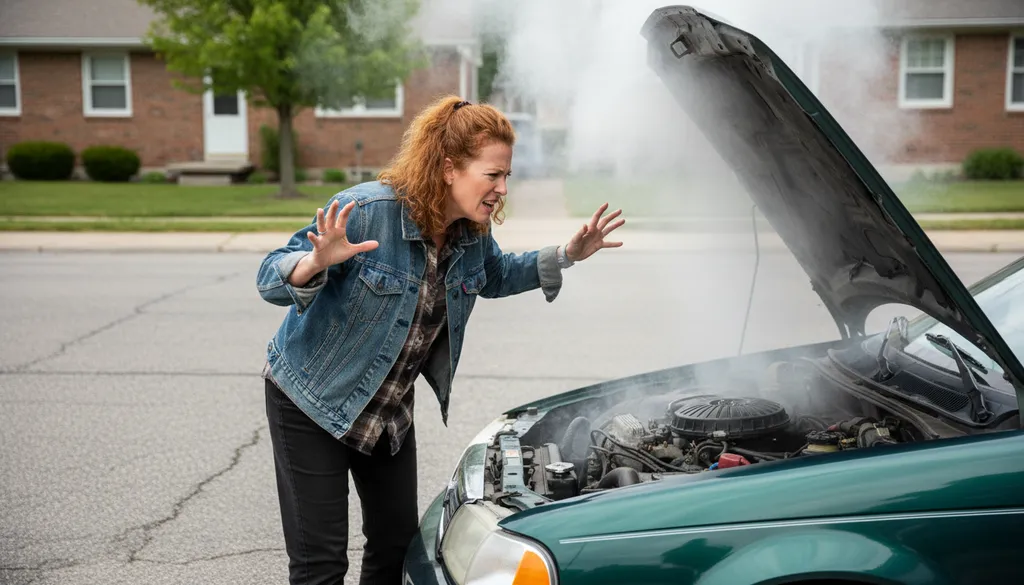
If the vehicle shows an oil-pressure warning, overheating warning, abnormal noise, or heavy smoke, respond to the warning first. Do not keep driving while trying to judge oil condition by color or smell.
What to do when the engine or oil is overheating
| What you observe | Immediate response |
|---|---|
| Oil-pressure warning stays on with the engine running | Pull over safely and switch the engine off; follow the manual and arrange assistance |
| Coolant-temperature or engine-overheat warning | Stop as the manual directs; do not open a hot cooling system |
| Oil-temperature warning or gauge outside the permitted range | Reduce load only if the manual instructs; otherwise stop safely and follow its warning procedure |
| Heavy smoke, rapid oil loss, or oil on the exhaust | Switch off and arrange a tow or inspection |
| No warning, but oil temperature rises repeatedly under the same load | Reduce the cause of load and have the cooling/lubrication systems assessed before repeating it |
The owner manual controls the exact warning response. A generic blog cannot supply a safe temperature threshold for every engine, sensor location, oil grade, or operating mode.
What heat does to engine oil
Oil viscosity changes with temperature: it becomes less viscous as it gets hotter and more viscous as it gets colder. Multigrade oil is formulated to stay within defined viscosity classes, but it still has operating limits.
Sustained heat also accelerates oxidation. Chevron’s oil-analysis guidance notes that oil that changes substantially from its original viscosity may be oxidized, breaking down, thickening, or cross-contaminated. Those conditions are determined by measurement and context—not a glance at the dipstick.
This is why the old version’s fixed “safe,” “warning,” and “danger” temperature table was removed. Actual limits depend on the engine, the specified oil, sensor location, calibration, load, and manufacturer instructions.
Common causes of excessive oil heat or degradation
Low oil level
Too little oil reduces the available oil volume and may coincide with loss of pressure or lubrication. Verify the level by the exact vehicle procedure. If the pressure warning remains on, switch off rather than adding oil to a running engine and hoping the warning clears.
Engine cooling-system problem
Oil and coolant are different circuits, but engine temperatures are connected. Low coolant, airflow problems, thermostat faults, pump faults, blocked passages, or other cooling-system issues can raise engine temperatures.
Do not remove a hot coolant cap. Let a qualified technician diagnose repeated overheating.
Incorrect oil grade or specification
Oil that does not meet the required viscosity or performance specification may not provide the intended behavior for that engine and duty. Confirm the complete grade, API/ILSAC or ACEA category, and any manufacturer specification.
Use the best-engine-oil selection checklist rather than moving to a thicker oil without manufacturer support.
Sustained load or severe operating conditions
Towing, climbing, track use, prolonged high speed, hot weather, repeated idling, and restricted airflow can increase heat load. Whether those conditions require a different viscosity, shorter service interval, or additional cooling is vehicle-specific.
Follow the manual’s towing, severe-service, and gauge instructions. Do not copy another driver’s temperature threshold from a different engine.
Oil cooler or flow problem
Some engines use an oil-to-coolant or oil-to-air cooler. A restricted flow path, damaged cooler, thermostat/control fault, or leak can affect oil temperature. Evidence may include repeatable gauge behavior, pressure changes, external leakage, or cross-contamination; component replacement still requires diagnosis.
Turbocharger heat exposure
Turbocharged engines place oil near very hot components. Use the exact oil specification and shutdown procedure in the vehicle manual. A universal “idle for 60 seconds” rule is not appropriate because modern systems, operating conditions, and manufacturer instructions differ.
Symptoms that do and do not prove overheated oil
Strong evidence that requires action
- an oil-temperature, oil-pressure, or engine-overheat warning;
- a documented gauge reading outside the manufacturer range;
- rapid oil-level loss, active smoke, or a confirmed leak;
- abnormal mechanical noise;
- laboratory evidence of oxidation, viscosity change, or contamination.
Clues that are not diagnostic alone
- dark oil;
- a hot smell after hard driving;
- lower viscosity while the oil is hot;
- one reading taken with an unfamiliar aftermarket sensor;
- varnish or deposits without vehicle history.
Dark color alone does not establish overheating. See what engine oil color really tells you for the evidence hierarchy.
Should you change oil after an overheating event?
There is no universal “change it within 1,000 miles” rule.
After an overheat, first identify and correct the cause. Then check the manufacturer procedure or service guidance for that event. A technician may recommend an immediate oil and filter change, inspection, pressure test, or oil analysis depending on severity, warnings, contamination, and engine design.
Questions that improve the decision:
- How high did the documented gauge or warning state go?
- How long did the condition last?
- Did oil pressure change?
- Did coolant enter the oil or oil enter the coolant?
- Did the oil level fall or rise?
- Was the correct oil already installed?
- Did the engine develop noise, smoke, or diagnostic codes?
Changing the oil without fixing the cause only resets the symptom clock.
Should you flush the engine after overheated oil?
Do not use a universal flush procedure. Chemical flushes and improvised short-interval fills may be unsuitable for the engine or contamination involved.
If coolant, fuel, debris, or severe oxidation is suspected, follow the manufacturer’s repair process. That process may include component repair, one or more oil changes, filter inspection, laboratory analysis, or other exact steps.
How to prevent repeat heat stress
- Maintain the oil at the correct level using the documented check procedure.
- Use the exact viscosity, service category, and manufacturer specification.
- Follow the normal or severe-service maintenance schedule that matches your use.
- Keep the cooling system maintained with the specified coolant and procedure.
- Watch warning lights and documented gauges during towing or sustained load.
- Investigate repeat temperature changes instead of masking them with thicker oil or additives.
Our guide to synthetic versus conventional oil explains formulation differences, but specification fit remains the first requirement.
Frequently asked questions
What temperature is too hot for engine oil?
Use the limit and warning behavior documented for the exact vehicle. There is no safe universal number across engines, oil grades, sensors, and operating modes.
Can overheated oil cause low oil pressure?
High temperature lowers viscosity, and pressure can be affected by level, grade, wear, pump/flow faults, or sensor issues. Treat the warning according to the manual rather than diagnosing the cause from temperature alone.
Does synthetic oil prevent overheating?
No oil fixes a cooling-system, oil-level, flow, or mechanical fault. A synthetic product may have performance benefits, but it must still match the exact required specifications and operating instructions.
Can I keep driving after the warning goes away?
Do not assume the problem is resolved. Follow the manual’s post-warning instructions and diagnose repeat or severe events before returning to normal use.
Sources
- Chevron Lubricants, Interpreting Oil Analysis: What Does It Tell You?, viscosity, oxidation, and cross-contamination interpretation section. Accessed July 27, 2026.
- Chevrolet, 2023 Silverado 1500 Owner’s Manual, pp. 124–125: engine oil pressure light caution and stop/check/restart procedure. Accessed October 1, 2026.
- Ford, 2022 F-150 Owner’s Manual, p. 488: checking the engine oil level and maximum-mark warning. Accessed October 1, 2026.
- Toyota Motor Sales USA, T-SB-0104-21 Rev2, pages 1–4, exact cold-weather oil-contamination applicability and diagnostic checks. Accessed July 27, 2026.