The sticker on your windshield might be lying to you. About 90% of drivers qualify for “Severe Service” oil change intervals but follow Normal Service schedules. Here’s what that actually costs you—and how to fix it.
Normal vs. Severe Service: Which One Are You?
Every owner’s manual lists two schedules. Most people only read one.
| Service Type | Interval | Who It Applies To |
|---|---|---|
| Normal Service | 7,500–10,000 mi / 12 months | Highway commuters, moderate climates, no towing |
| Severe Service | 5,000 mi / 6 months | Everyone else (city driving, short trips, extreme temps, towing) |
If any of these apply to you, you’re Severe Service:
- Trips under 5 miles (oil never fully warms up → moisture buildup)
- Stop-and-go or city traffic
- Temperatures regularly below 32°F or above 90°F
- Towing or hauling loads
- Lots of idling (remote starts, drive-throughs)
How to Check Engine Oil: Hot or Cold?
Should you check engine oil hot or cold? Cold (or after 10 minutes of sitting) is the correct answer for an accurate dipstick reading.
Here’s why: when the engine is hot, oil is still circulating through passages and sitting in the head. The dipstick reading can appear lower than actual level. Let the car sit, then:
- Park on level ground
- Wait 10 minutes after engine off
- Pull dipstick, wipe clean, re-insert fully
- Pull again — level should be between MIN and MAX
Check at least once a month, not just at oil change time.
What Engine Oil Color Tells You
Engine oil color is one of the quickest health indicators you have:
| Color | What It Means | Action |
|---|---|---|
| Amber / light brown | Fresh, healthy oil | ✅ Normal |
| Dark brown / black | Heavily oxidized | Schedule an oil change soon |
| Milky / creamy | Coolant contamination | ⚠️ Stop driving, see a mechanic |
| Grey / metallic | Metal particle contamination | ⚠️ Stop driving, see a mechanic |
Don’t wait for a warning light. Black oil on the dipstick means the oil has lost most of its protective additives—even if you haven’t hit the mileage mark yet.
Low Engine Oil Pressure: What It Means and What to Do
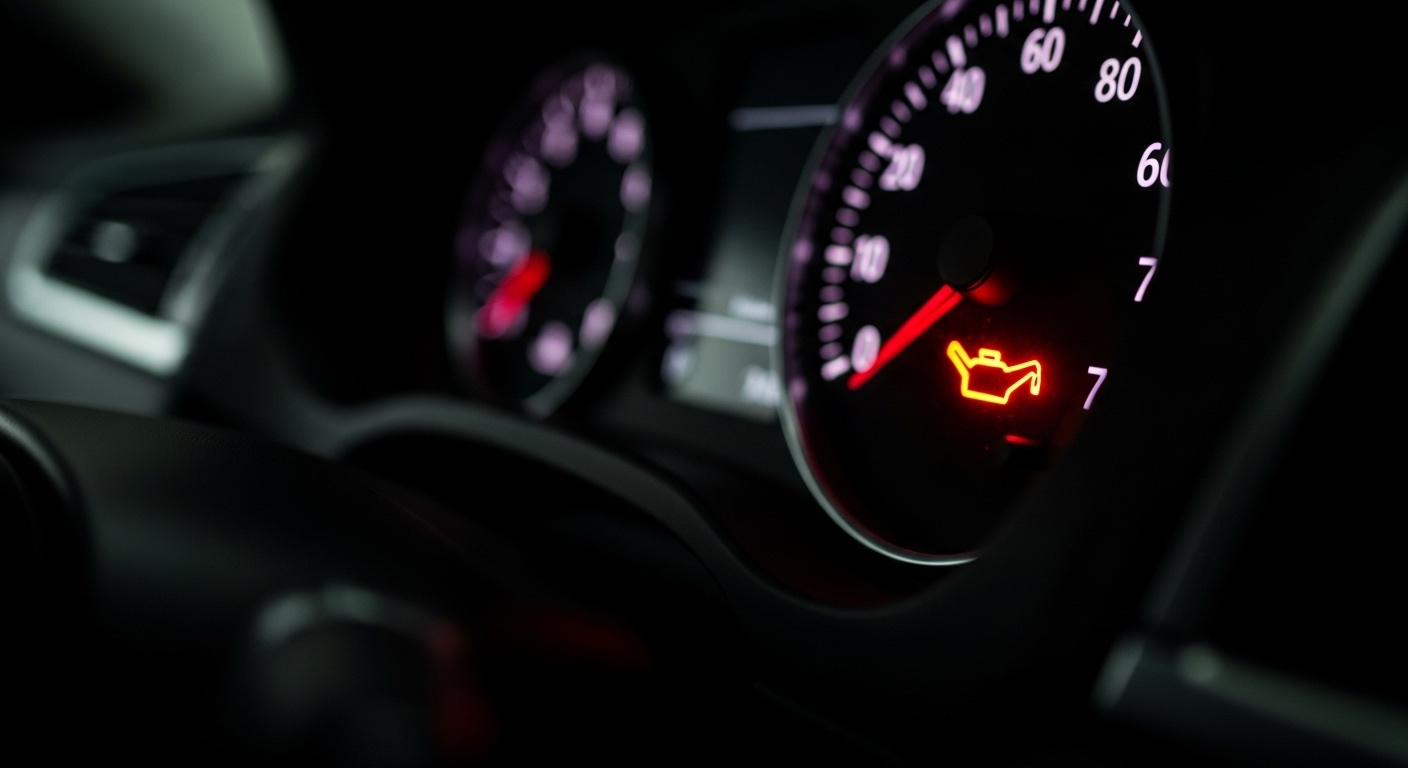
Low engine oil pressure is one of the most serious warnings your car can give you. If the oil pressure light comes on while driving:
Do this immediately:
- Pull over safely within 30–60 seconds
- Turn off the engine
- Check oil level with the dipstick
- If level is fine → do not drive, call for a tow
Low engine oil pressure with a full oil level suggests a failing oil pump, blocked oil pickup, or a serious internal leak. Driving through it can seize the engine within minutes—turning a $200 repair into a $4,000+ engine replacement.
Common causes:
- Oil level too low (top up and check for leaks)
- Oil diluted with fuel from excessive short trips
- Oil pump wear in high-mileage engines
- Using a viscosity too thin for the engine
When the Interval Rules Change
| Situation | Recommendation |
|---|---|
| Brand new car | First change at 1,000–1,500 miles (removes break-in particles) |
| Turbocharged engine | 5,000 miles max — turbos run hotter, oil degrades faster |
| 100,000+ miles | Consider 3,000–4,000 mile intervals with high-mileage oil |
| After engine repair | Change at 500–1,000 miles to clear machining debris |
The Simple Rule for Most Drivers
Change oil every 5,000 miles OR 6 months — whichever comes first.
- Cost: ~$45–50 per change = ~$90–100/year
- Prevention: avoids $3,000 sludge damage, VVT solenoid failures ($300–$800 each), and engine seizure
Before every oil change, confirm you’re using the right oil for your engine. Use OilFinderPro with your VIN to get the exact viscosity, spec, and capacity in seconds.
Read next:
| *Last Updated: February 2026 | 4-minute read* |