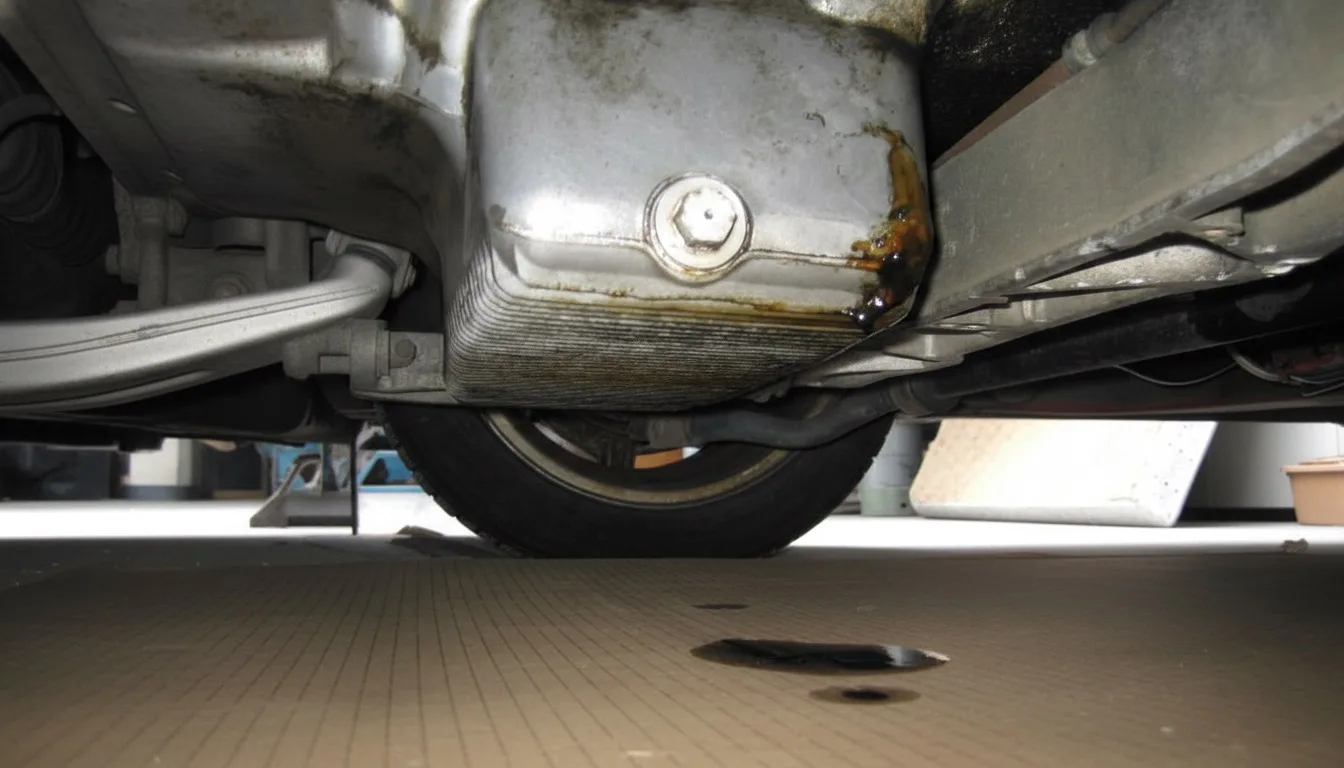
A car leaking oil when parked usually has a worn or loose seal somewhere on the engine: the oil pan or drain plug, the oil filter, the valve cover gasket, or a crankshaft or camshaft seal. Oil drips while the car sits because gravity carries it to the lowest point, which is often not where the leak starts.
An engine oil leak can appear as a driveway spot, a wet engine surface, a burning smell, or a falling dipstick level. Start by confirming the fluid and the highest fresh wet point. Do not assume the part directly above the puddle is the source—airflow and gravity move oil.
Urgent signs: Stop safely and switch the engine off if the oil-pressure warning appears (GM warns that driving with low oil pressure “can damage the engine” — 2023 Silverado manual, p. 124), oil is flowing rather than seeping, smoke is building under the hood, or the dipstick no longer shows oil. Arrange a tow instead of driving to “see if it gets worse.”
Watch: 2-Minute 14-Second Common Engine Oil Leaks Video
This overview introduces common leak points. Use the diagnostic steps and current cost sources below before authorizing a repair.
Is the Leaking Fluid Engine Oil?
| Clue | More consistent with | Important limitation |
|---|---|---|
| Amber to dark brown, slippery, around the engine or oil pan | Engine oil | Fresh oil can be pale; dirty fluids can look alike |
| Red or reddish-brown, near transmission or cooler lines | Transmission fluid | Some modern fluids are not red |
| Green, orange, pink, or yellow and watery | Coolant | Color varies by manufacturer |
| Clear water after air-conditioner use | Condensation | Normal unless mixed with another fluid |
| Strong fuel smell and fast evaporation | Fuel | Do not start the vehicle; treat as a fire risk |
Color alone is not a diagnosis. Check the engine-oil level using the owner’s-manual procedure and compare the fluid’s location, feel, and smell.
How to Find an Engine Oil Leak
- Check the level and warning lights. A low level changes the urgency; a pressure warning requires shutdown.
- Record where the vehicle was parked. Clean cardboard can show the drip’s position and rate without staining the driveway.
- Inspect from the top down. Look for the highest fresh wet point around the valve cover, filter housing, oil cap, and PCV plumbing.
- Check recent service points. After an oil change, inspect the filler cap, filter, drain plug, and surrounding splash shields.
- Clean before replacing parts. A technician may clean the area and recheck after driving, or add fluorescent dye and trace it with UV light.
- Confirm the exact source. Oil from above can coat the pan or bellhousing and imitate a lower gasket or rear-main-seal leak.
Do not pressure-wash a hot engine or crawl under a vehicle supported only by a jack.
Oil Leak Causes and Symptoms
Valve-cover gasket
Oil starts high on the engine and may run onto the exhaust, producing odor or light smoke before a driveway puddle appears. Some engines require intake components to be removed for access.
Oil filter, housing, or cooler seal
Look here when the leak began after service or oil collects around the filter assembly. A double filter gasket, damaged housing seal, or loose component can lose oil quickly.
Drain plug or oil-pan seal
A drain-plug leak begins at a recent service point. An oil-pan leak is lower and can be confused with oil running down from above. Some vehicles require subframe or engine support work to access the pan.
Crankshaft or camshaft seal
Oil may appear near the crank pulley, timing cover, or transmission bellhousing. Confirm the source before authorizing major labor: timing components or the transmission may obstruct access.
PCV-system fault
A crankcase-ventilation fault can contribute to oil being drawn into the intake or pushed past seals. The correct test depends on the engine; shaking a removable valve is not a universal diagnosis.
Cylinder-head or timing-cover sealing
These repairs can overlap several joints and require careful cleaning and inspection. Milky residue, coolant loss, overheating, or exhaust symptoms point beyond a simple external gasket leak.
Engine Oil Leak Repair Cost
Repair cost depends more on access than on the price of the seal itself. A drain-plug washer or filter seal is a small job; the same oil can also come from a seal that needs the transmission or timing components removed. Get a quote for your exact vehicle once the source is confirmed. What usually drives the price:
| Leak source | What drives the cost |
|---|---|
| Oil filter, cap, or drain plug | Usually a quick fix, unless threads or housings are damaged |
| Valve-cover gasket | Intake removal, multiple covers, plug-tube seals, warped covers |
| Oil-pan gasket | Subframe removal, engine support, sealant cure time, pan damage |
| Camshaft or crankshaft seal | Timing-system or transmission access dominates the labor |
| Rear main or cylinder-head leak | Major disassembly and any secondary damage |
Ask the shop to state:
- the confirmed leak source and diagnostic method;
- parts and labor separately;
- which surrounding seals or single-use fasteners are included;
- whether oil, filter, cleaning, and post-repair verification are included;
- whether the quote covers only the leak or also oil-damaged belts, hoses, mounts, or emissions parts.
Can You Drive With an Oil Leak?
Do not judge only by puddle size. A small leak onto a hot exhaust can create smoke, while a leak trapped by an undertray may leave no spot.
- Monitor only long enough to diagnose: a trace seep, stable level, no smoke, and no warning.
- Repair promptly: repeated drops, a falling level, or burning smell.
- Stop and tow: pressure warning, rapid loss, smoke building under the hood, a dry dipstick, or oil reaching a belt or exhaust in quantity.
If the ground stays clean but the level falls, the engine may be consuming oil rather than leaking it. Toyota notes that every engine uses some oil, more when new, under heavy loads or towing, or with long idling (2024 RAV4 owner’s manual). Use the engine-burning-oil guide to tell the two apart. If odor is the main symptom, see the burning-oil-smell guide.
Use the owner’s manual for the exact oil requirement. You can also browse OilFinderPro’s available vehicle-specific oil information before buying top-up oil.
Frequently Asked Questions
How can I tell whether a puddle is engine oil?
Color alone is not enough. Check the engine oil level, inspect above the drip for the highest wet point, and confirm the fluid source before ordering a repair.
Why is my car leaking oil when parked?
The oil drains to the lowest point while the car sits. Common sources are the oil pan gasket or drain plug, the oil filter, the valve cover gasket, and crankshaft or camshaft seals. Look for the highest fresh wet spot to find where it starts.
Can I drive with a small engine oil leak?
A trace seep with a stable level and no warning may allow time for diagnosis. Stop and arrange a tow if the pressure warning appears, the level falls rapidly, smoke builds under the hood, or the dipstick is dry.
Why does engine oil leak repair cost vary so much?
Labor access often matters more than the seal price. Vehicle design, the confirmed leak source, damaged threads or housings, and oil-contaminated surrounding parts can all change the final quote.
Sources
- Chevrolet, 2023 Silverado 1500 Owner’s Manual, pp. 124–125: engine oil pressure light caution and procedure. Accessed October 1, 2026.
- Toyota, 2024 RAV4 Owner’s Manual (OM42F42U), Engine compartment: engine oil consumption note and level check. Accessed October 1, 2026.