A VIN can help identify the factory vehicle configuration, but the eighth character is not a universal engine code. For US-standard 17-character VINs, positions 4–8 are the manufacturer-defined Vehicle Descriptor Section. Their meaning depends on the manufacturer and model.
Use the full VIN in NHTSA’s decoder or a manufacturer system, then confirm the engine against vehicle-specific manufacturer information before selecting engine oil.
What the 17-character VIN sections mean
NHTSA’s VIN rule divides a 17-character VIN into sections. For this task, the important distinction is that positions 4–8 describe manufacturer-defined vehicle attributes; position 9 is the check digit, position 10 identifies model year, and position 11 identifies the plant.
That does not mean position 8 always identifies the engine. A manufacturer may encode engine or restraint information within the Vehicle Descriptor Section differently, and a decoder may need the complete VIN plus the manufacturer’s submitted data.
How to identify the engine safely
- Copy all 17 characters from the dashboard plate or certification label.
- Enter the complete VIN in NHTSA’s VIN Decoder.
- Review the decoded engine, displacement, fuel, and vehicle attributes for consistency.
- Confirm the result with the owner’s manual, manufacturer portal, under-hood emissions label, or dealer parts/service data when exact engine identity matters.
- Use the exact engine and market to find the oil viscosity, performance category, OEM specification, and refill quantity.
NHTSA notes that vPIC information is based on data manufacturers submit. A blank or generic result is not permission to guess.
A real example: GM prints the VIN engine code
Some manufacturers publish the link between a VIN character and the engine. GM’s 2024 Chevrolet Colorado owner’s manual lists two versions of its 2.7L four-cylinder: engine L3B with VIN code K, and engine L2R with VIN code C (2024 Colorado owner’s manual, p. 341). On that truck, the VIN tells you which 2.7L you have. The manual then gives the oil for it: full synthetic dexos1, SAE 5W-30 (p. 254; our spec page).
Other manufacturers code engines differently, so check your own manual’s “Engine Specifications” table for a VIN code column.
Where to find the VIN
Common locations include:
- the lower driver’s side of the windshield, viewed from outside;
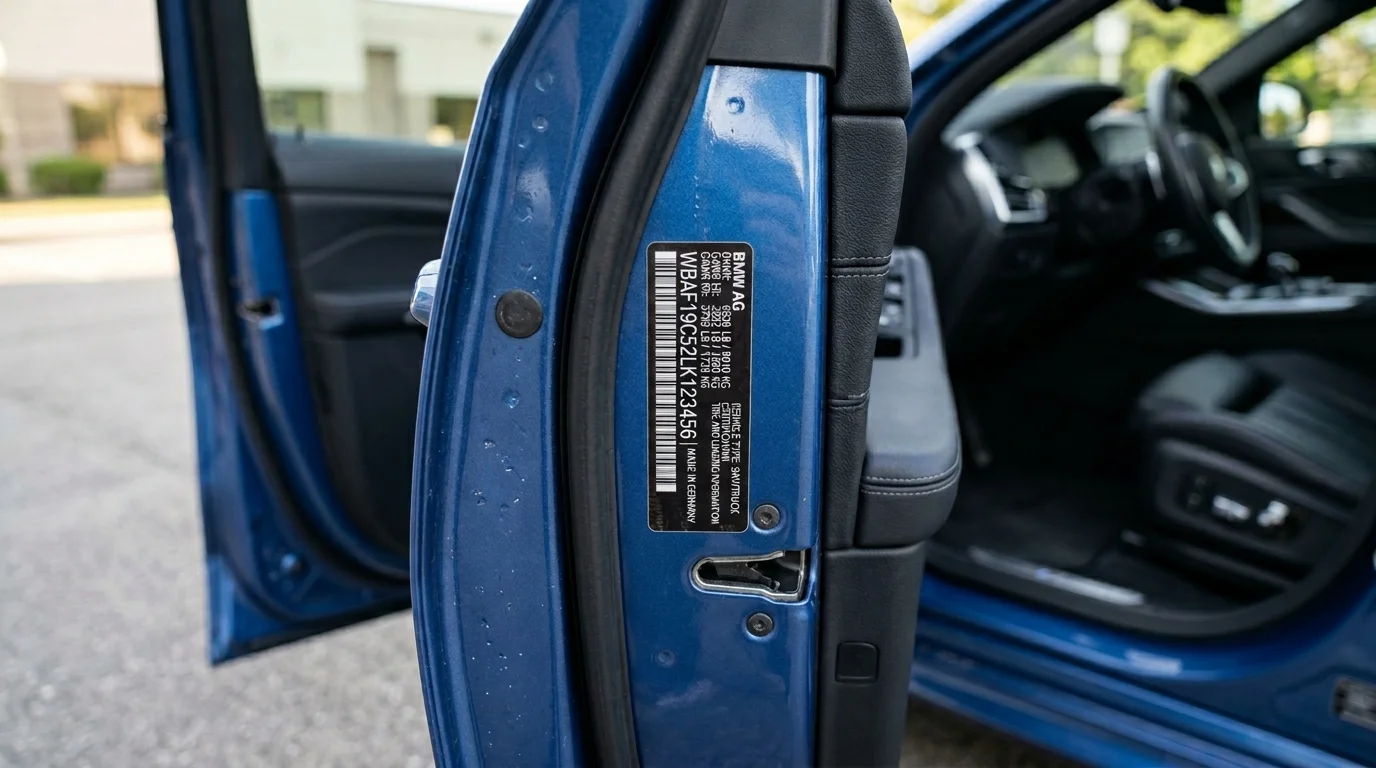
- the driver’s door or door-pillar certification label;
- registration and insurance documents.
Check the physical vehicle before relying on a document that could contain a typing error.
Why engine identity matters for oil
One model year can include multiple engines. Those engines can differ in viscosity, manufacturer specification, and refill quantity. Model-level advice becomes unsafe when it silently treats one engine as every engine.
OilFinderPro’s specifications lookup can help organize the result, but a legacy catalog entry still under review must be confirmed against exact-market manufacturer evidence.
Frequently Asked Questions
Is the engine code always the eighth VIN character?
No. Positions 4–8 are manufacturer-defined vehicle attributes. The engine may be represented there, but the position and coding are not universal.
How do I find my engine code from the VIN?
Decode the full VIN with NHTSA’s decoder, then check your owner’s manual. Some, like GM’s, list a “VIN code” for each engine in the Engine Specifications table.
Can a VIN identify the exact engine?
It often can when decoded with manufacturer-supplied data. Confirm the returned configuration when the decoder is incomplete or when a safety-sensitive specification depends on it.
Does a VIN directly tell me the oil specification?
Not by itself. The VIN identifies the vehicle configuration; the applicable owner’s manual or manufacturer service information supplies the oil requirement.
Sources
-
Chevrolet, 2024 Colorado Owner’s Manual, p. 341 (Engine Specifications: 2.7L L3B VIN code K; L2R VIN code C) and p. 254 (engine oil). Accessed October 1, 2026.
- NHTSA, VIN Decoder, vPIC decoder and statement that decoded information is based on data manufacturers submit. Accessed July 27, 2026.
- NHTSA, Final Rule: Vehicle Identification Number Requirements, VIN structure and manufacturer-defined Vehicle Descriptor Section at positions 4–8. Accessed July 27, 2026.