
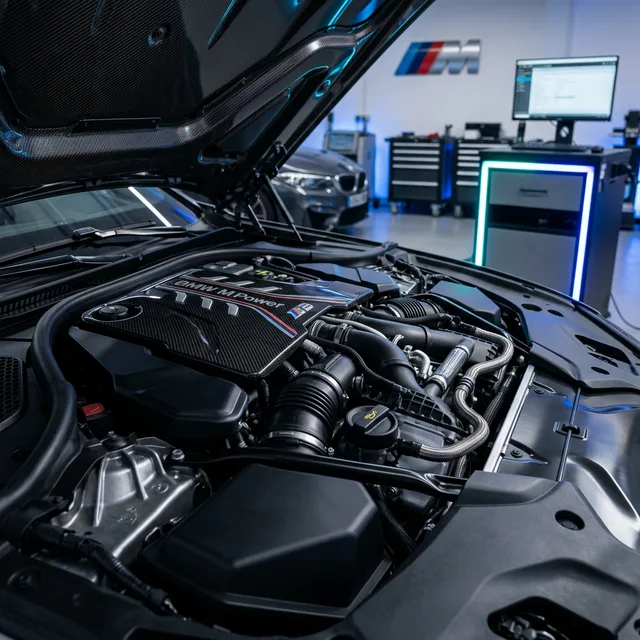
For a US-market BMW, the best oil is the product that matches the viscosity and BMW Longlife specification in the owner’s manual for the exact model year and engine. There is no safe brand-wide table that assigns one Longlife code to every B48, B58, M engine, diesel, or plug-in hybrid.
BMW’s own older US quick-reference guide demonstrates the problem: even within the applications covered by that 2017 document, BMW lists multiple approved oil groups and viscosities. It also tells technicians to use the applicable owner’s manual for viscosity and details. Treat the manual for your vehicle as controlling.
Watch: How to Choose Oil for a BMW
Editorial correction: the video's broad B48/B58, LL-04, LL-17, LL-22, hybrid, interval, and damage statements are not a substitute for exact US vehicle documentation. Use the method and primary sources below.
The direct BMW oil checklist
Record these fields before comparing products:
- US market and exact model year.
- Exact engine or full VIN-decoded configuration.
- Permitted SAE viscosity grade or grades.
- Required BMW Longlife specification.
- Exact product name and viscosity shown by the oil marketer.
A bottle that says “European,” “BMW,” or only the correct viscosity has not completed the match.
What BMW Longlife means in the selection process
BMW Longlife designations are manufacturer specifications, while SAE viscosity and API or ACEA categories describe other parts of the oil requirement. One does not automatically replace another.
BMW’s 2017 US quick-reference guide lists examples including BMW Longlife-01, Longlife-01 FE, and Longlife-14 FE+ for applications within that document’s stated scope. It is valuable historical evidence, but it cannot assign oil to a later vehicle or to an engine not named there. Requirements can change, and a European-market recommendation should not be imported into a US article without matching evidence.
How to find the exact BMW requirement
BMW USA provides digital owner’s manuals by VIN. Use that lookup, then find the engine-oil or operating-fluids section and record the complete wording.
When checking a product:
- match the exact viscosity, not just the product family;
- distinguish a named BMW approval from a marketer’s “recommended for” statement;
- use a current product data sheet when the bottle wording is abbreviated;
- do not assume a newer-sounding Longlife number is backward compatible;
- do not transfer an M-car, diesel, or hybrid requirement to a standard gasoline model.
Our guide to OEM-approved oil versus “meets requirements” explains how to interpret the label without overstating what any claim proves.
Oil-change timing is vehicle-specific too
Use the maintenance display and the instructions in the exact BMW owner’s manual. A universal 5,000- or 15,000-mile interval is not supportable across BMW model years, engines, markets, and operating conditions.
Changing early is an owner’s maintenance choice, but it should not be presented as a factory requirement or as proof that the oil currently installed is unfit. If the vehicle reports an oil-pressure or oil-level warning, follow that warning procedure instead of waiting for routine service.
Frequently Asked Questions
Can I use LL-04 in every US gasoline BMW?
No universal answer is safe. Use LL-04 only when the current US vehicle information permits it for the exact application.
Does every B48 or B58 use the same Longlife spec?
Do not infer a requirement from the engine-family name alone. Model year, calibration, market, and vehicle application can matter; confirm by VIN and manual.
Is thicker oil safer in a high-mileage BMW?
Not automatically. Use only a grade permitted for the application unless qualified BMW service information directs otherwise.
Can I mix two BMW Longlife oils for a top-up?
Follow the emergency top-up guidance in the manual. A shared BMW approval on one grade does not make every blend or viscosity an approved substitution.
Where should I start if I do not have the paper manual?
Use BMW USA’s digital manual lookup with the VIN. OilFinderPro’s specifications catalog can help organize the search, but any pending catalog page must still be checked against BMW’s source.
Sources
- BMW USA, Digital Owner’s Manuals, VIN-based route to the applicable US owner’s manual. Accessed July 27, 2026.
- BMW of North America, Engine Oil Quick Reference and Drain Plug Torque, pages 1–4, document applicability, approved-oil groups, viscosity examples, and direction to the applicable owner’s manual. Published December 2017; accessed July 27, 2026.
- SAE International, SAE J300_202405 Engine Oil Viscosity Classification, Scope, viscosity-classification purpose. Revised May 9, 2024; accessed July 27, 2026.
- ACEA, ACEA Oil Sequences 2023—General Requirements, page 3, oil marketer responsibility and category nomenclature. Accessed July 27, 2026.
Read Next
- OEM Approved vs. “Meets Requirements” Oil
- Best Engine Oil: Four Checks That Matter
- VIN Decoder: Finding the Engine Configuration
| *Last Updated: July 2026 | 6-minute read* |